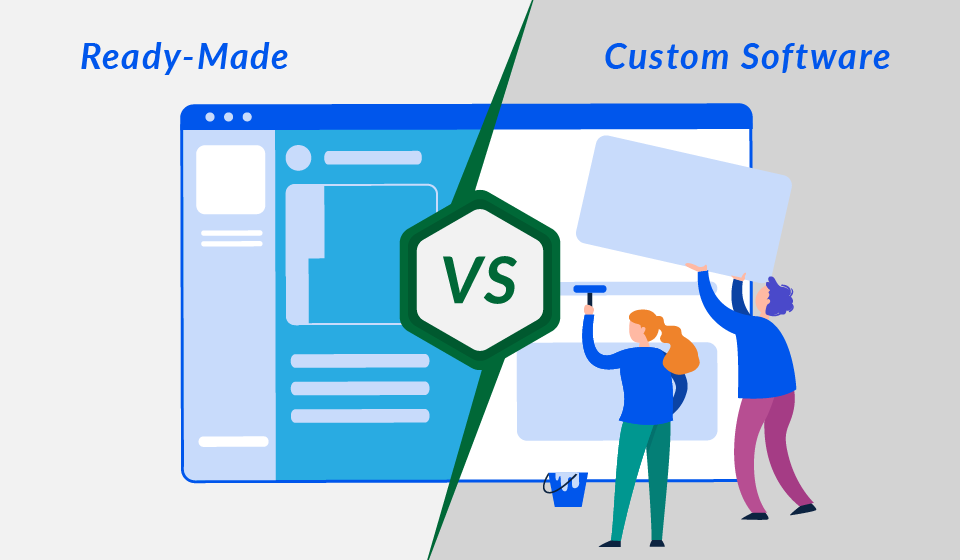
In today’s digital-driven world, choosing the right software for your business isn’t just a technical decision — it’s a strategic one. The software you pick will influence your efficiency, customer satisfaction, daily workflow, and long-term growth.
Many business owners find themselves asking the same question:
Should we use ready-made software tools, or invest in custom-built software?
To make the best decision, you need to clearly understand what each option offers and where each approach makes sense.
What Is Ready-Made Software?
Ready-made software is a pre-built application designed to serve a wide range of businesses. It’s usually offered as a subscription service and can be used immediately. Examples include Shopify for e-commerce, Trello for task management, QuickBooks for accounting, and HubSpot for CRM.
Benefits of Ready-Made Software
One of the biggest advantages of ready-made systems is speed. You can start using them right away. They also tend to have lower upfront costs, regular updates, and built-in customer support. Since they are used by many businesses, their features are already tested and proven to work in real-world environments.
Limitations of Ready-Made Software
However, ready-made tools come with restrictions. They are designed to fit general business needs — not your unique processes. This means your business will often need to adapt to the software, rather than having the software fit your workflow.
Over time, subscription costs can also become expensive. And in many cases, companies end up paying for features they never use or needing extra tools to fill the gaps, which leads to system confusion and workflow inefficiencies.

What Is Custom Software?
Custom software is built specifically for your business. It is designed to support your exact workflow, automate your unique processes, and adapt to your long-term growth strategy.
Benefits of Custom Software
Custom software fits your business perfectly. It doesn’t include unnecessary features and focuses only on what your business really needs. As your business grows, custom software can grow with it — adding new features, integrating new modules, and adjusting functionality based on your evolving goals.
You also gain full ownership and control. You are not locked to a vendor, subscription, or platform limitations. Most importantly, custom solutions often create a competitive advantage — because no other business has your exact system.
Limitations of Custom Software
Of course, custom software requires a higher initial investment, because it needs planning, development, and testing. It also takes more time to build compared to installing a ready-made tool. That said, for businesses with long-term growth plans, it often becomes more cost-effective over the years.
Which One Should You Choose?
The right choice depends on the complexity of your business, your operational needs, and your growth goals.
Choose Ready-Made Software If:
- You are a new business still figuring out your systems.
- Your workflow is simple and doesn’t require deep customization.
- You need something fast and affordable to get started.
Choose Custom Software If:
- Your business has unique processes that standard tools don’t support well.
- You are scaling and need a system that grows with you.
- You want to improve efficiency through automation.
- You want to build a competitive edge in your industry.
A Simple Real Example
Imagine a company that manages deliveries. If they use a general task management tool, drivers must update everything manually. But with a custom delivery system, orders can be assigned automatically, routes can be optimized, customers can get notifications, and managers can track performance in real time.
This isn’t just software — it becomes the engine that drives the business.
Conclusion
Both ready-made software and custom software can be valuable. However, if your business is growing, has unique operations, or aims to differentiate itself in the market, custom software becomes a strategic advantage — not just a digital tool.
The key is choosing what aligns with your long-term vision, not just your immediate needs.